Category: Insulation

Attic insulation, as seen in a blog answerig, "What Is the Recommended Insulation Thickness for an Attic?"

What Is the Recommended Insulation Thickness for an Attic? Experts Weigh In

What is the recommended insulation thickness for an attic almost always gets asked as a depth question, and depth is really just the output. The short answer for a Chattanooga home is somewhere between thirteen and twenty inches. The number that matters is R-value, and the inches it takes to reach a given R-value change completely depending on the material

Read More
A worker wearing a face mask and yellow gloves bending over to handle old, damaged fiberglass batt insulation laid on a hardwood floor inside a home under renovation, with exposed wall studs and partially insulated walls visible in the background-- leading to the question "Can you touch insulation?"

Can You Touch Insulation With Bare Hands? What to Know First

If you are wondering, “Can you touch insulation with your bare hands?”, it is generally best not to. Fiberglass can leave your skin itchy and irritated, cellulose can expose you to a lot of dust, and fresh spray foam should not come into contact with your skin at all. Even if you are only checking the insulation in your attic,

Read More
A vented attic, shown as an example on where not to use spray foam insulation

Where Not to Use Spray Foam Insulation in Georgia

Knowing where not to use spray foam insulation is an important question for homeowners throughout Woodstock, GA, and the metro Atlanta area. While spray foam insulation can improve energy efficiency, it can also create moisture problems, ventilation concerns, or costly repairs if installed improperly. Georgia’s hot summers, heavy humidity, severe storms, and fluctuating temperatures make insulation decisions especially important for

Read More
An attic with spray foam insulation with a fire warning sign in reference to a blog about "is spray foam insulation flammable"

Is Spray Foam Insulation Flammable? Truth About Fire Ratings

Homeowners researching insulation often ask: is spray foam insulation flammable? The short answer is yes; spray polyurethane foam is a plastic material that can ignite under the right conditions. But that one-word answer leaves out the most important part of the story. Fire ratings, protective coatings, and proper installation requirements exist precisely because the construction industry recognized this risk decades

Read More
A side-by-side showing the difference between faced and unfaced insulation

Learn the Difference Between Faced and Unfaced Insulation

The Difference Between Faced and Unfaced Insulation: A Simple Guide for Attics, Walls, and Crawl Spaces If you have ever stood in the insulation aisle at a home improvement store or gotten a quote from a contractor, you have probably heard the terms “faced” and “unfaced” thrown around. Understanding the difference between faced and unfaced insulation is one of the

Read More
Open cell vs closed cell spray foam insulation

Open Cell vs Closed Cell Spray Foam: A Complete Guide

Spray foam insulation has become one of the most effective ways to insulate homes and commercial buildings. Its ability to seal air leaks, improve energy efficiency, and provide long‑lasting performance makes it a top choice over traditional insulation methods like fiberglass batts or blown‑in insulation. However, spray foam isn’t a one‑size‑fits‑all solution; there are two main types: open cell vs closed

Read More
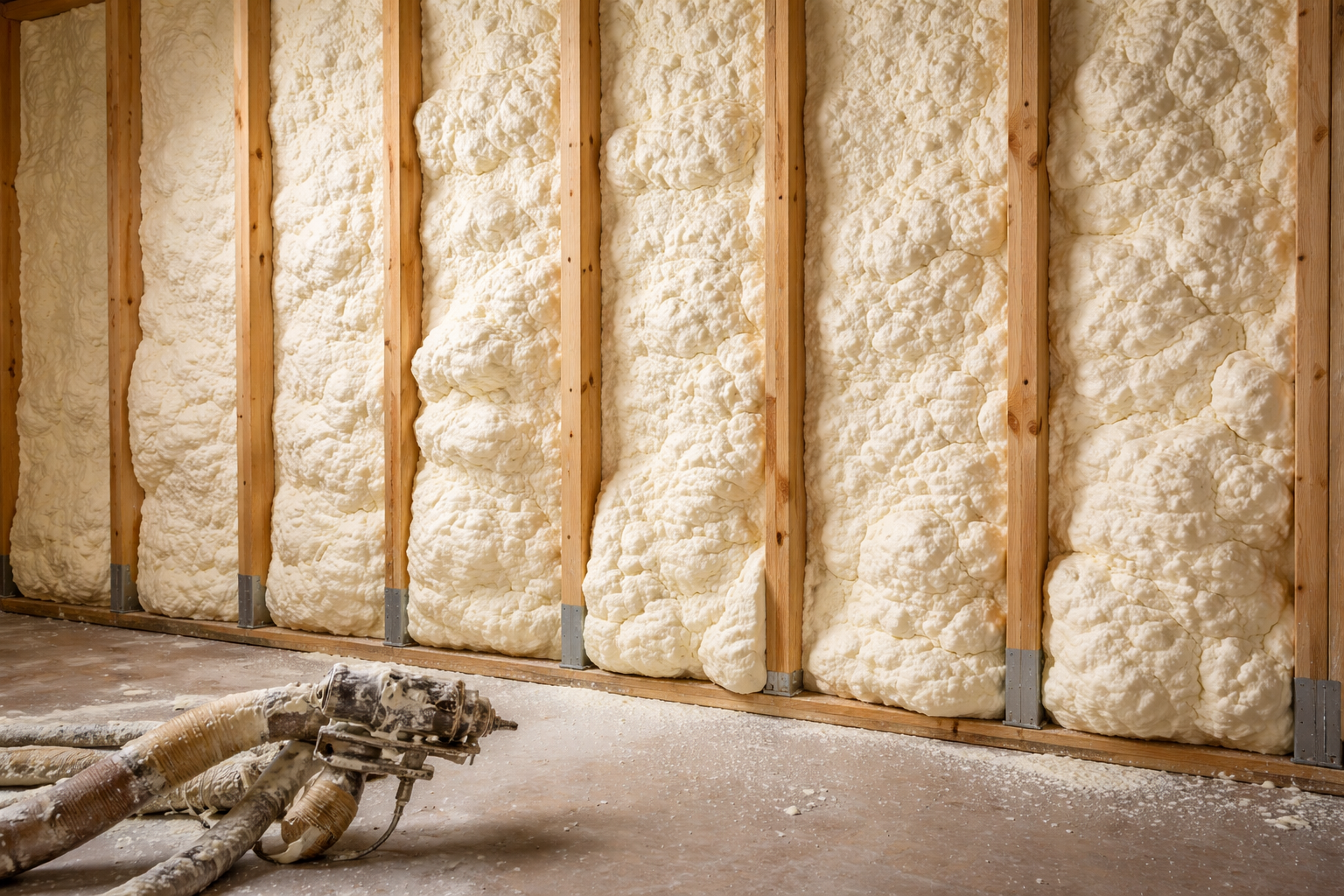
A basement with closed cell spray foam insulation in reference to the question "How Much Does Closed Cell Spray Foam Insulation Cost?"

How Much Does Closed Cell Spray Foam Insulation Cost? Breaking Down Price Factors

Closed-cell spray foam insulation is one of the most effective ways to insulate a building because it expands rapidly, forms an airtight seal, and provides both insulation and structural reinforcement. One of the first questions homeowners and builders ask is “How much does closed cell spray foam insulation cost?” While prices can vary based on location, thickness, and project size,

Read More
Attic insulation shown in reference to a blog about how attic insulation improves hvac efficiency

How Attic Insulation Improves HVAC Efficiency

Learning how attic insulation improves HVAC efficiency comes down to energy retention. Proper insulation prevents heated and cooled air from escaping through the roof, while poor insulation forces your HVAC system to work overtime to regulate indoor temperatures. With proper attic insulation, your home stays warmer in winter and cooler in summer with less effort, which means lower energy use,

Read More
Residential attic insulation in reference to the question "Are there rebates for attic insulation?"

Are There Rebates for Attic Insulation? Your Savings Guide

Are There Rebates for Attic Insulation? Your Complete Savings Guide If you’re planning an attic insulation upgrade, you’re probably wondering: Are there rebates for attic insulation? The answer is a resounding yes. Homeowners across the United States can access multiple financial incentives that significantly reduce the total cost of insulation projects. From federal tax credits to utility rebates and state programs, these

Read More
Professional in white suit with face mask insulates an attic after learning when to replace attic insulation

When to Replace Attic Insulation: 6 Warning Signs 

7 Warning Signs Homeowners Shouldn’t Ignore Your attic insulation works silently behind the scenes to maintain your home’s comfort and energy efficiency. But like any building material, insulation doesn’t last forever. Knowing when to replace attic insulation can save you money on energy costs, prevent structural damage, and protect your family’s health. Let’s explore the telltale signs that it’s time

Read More